Overview
Recover wasted heat. Reduce electrical load. Improve the factory system.
Beefy’s needed to reduce electricity usage and improve energy efficiency across a busy food production environment. The opportunity was not limited to one piece of equipment. The factory was using electricity for hot water, refrigeration compressors and defrosting, while also rejecting usable heat from the refrigeration plant.

The Problem
The factory was paying to make heat, then paying again to throw heat away.
The issue Beefy’s needed to fix was high energy use across the site, with hot water demand, refrigeration compressor loads, air-cooled condenser heat rejection and electric defrost cycles all adding pressure to the factory’s energy profile.
Instantaneous hot water units were a major contributor to high energy use and baseline peak demand. At the same time, the refrigeration systems were rejecting heat through air-cooled condensers, which meant useful energy was being sent outside instead of being put to work inside the factory.
Low-temperature refrigeration added another layer of load. Electric defrost heaters operated at very high temperatures, creating steam and humidity inside the freezer room. That moisture and heat increased the refrigeration load once the room returned to normal operation.
The problem was a system problem. The site needed lower electrical demand, better use of waste heat, more efficient hot water production and a cleaner defrost process.
The Solution
A staged upgrade that reused energy already in the plant.
SETPOINT used a staged approach. The solution started with energy evaluation, then moved into heat recovery, hot water pre-heating, compressor control and a redesigned defrost method that used recovered heat rather than electric elements.
Energy evaluation
SETPOINT worked with Energy Flex to understand how and where the factory was using energy, creating a clear starting point for practical cost-saving measures.
Heat recovery for hot water
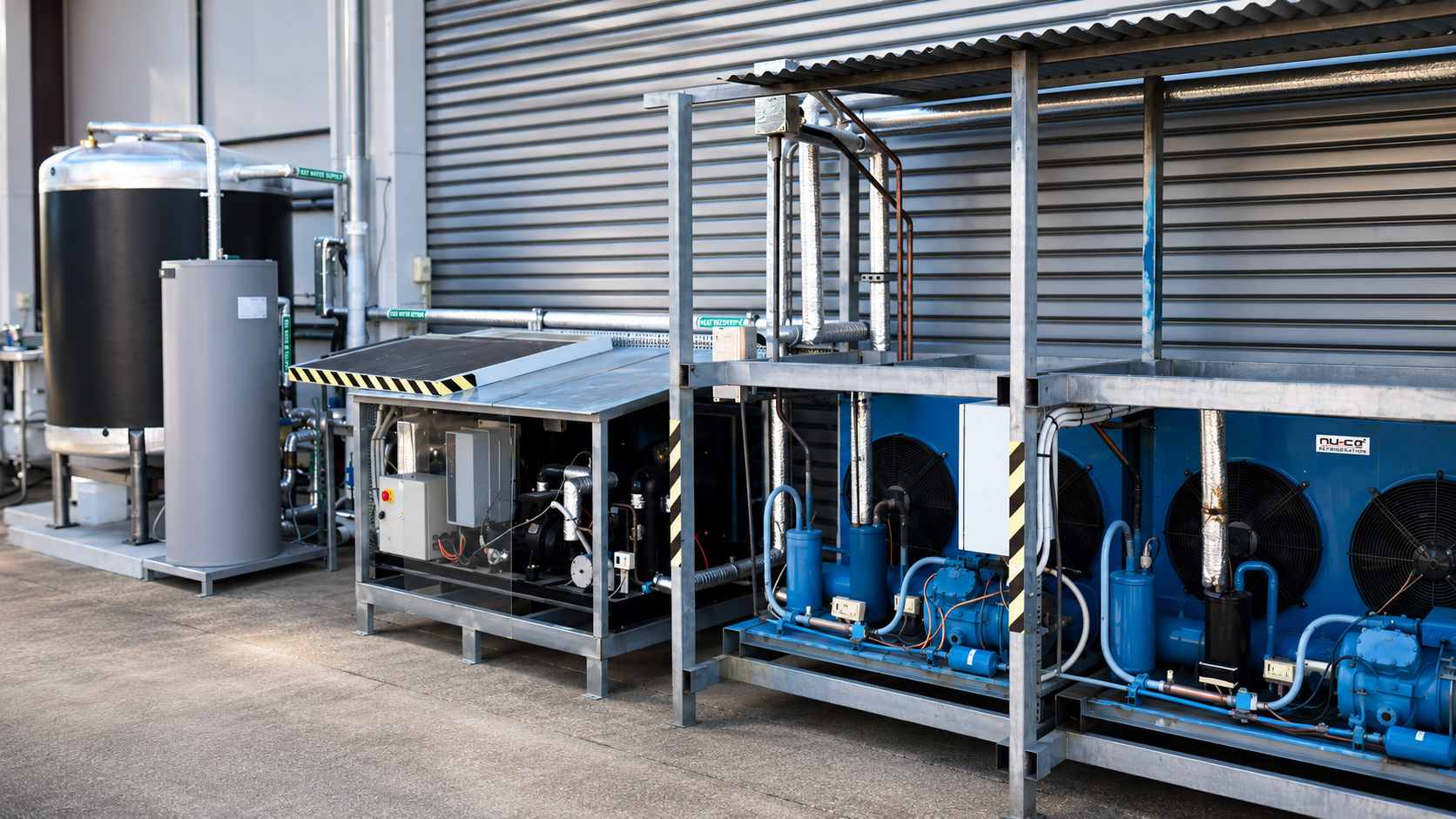
The design reclaimed heat from the refrigeration systems and used it to pre-heat hot water required in the factory, instead of letting that heat be rejected by the condensers.
Reduced hot water electrical load
Two three-phase instantaneous H/W units were removed, three additional H/W storage units were made redundant, and incoming hot water was pre-heated to 40 to 50°C before final boosting through a 3.6 kW single-phase storage unit.
Variable Speed Drive control
Multiple Variable Speed Drives were retrofitted to the existing Direct Online refrigeration compressors to reduce energy input and remove the normal peak starting current from the site demand profile.
Recovered-heat glycol defrost
SETPOINT worked with engineers at Beijer Ref and Insinct to replace electric defrost heaters with an embedded glycol coil circuit, heated by the same heat reclamation system installed earlier in the project.
Waste heat became useful factory heat.
The refrigeration systems were already creating the heat needed by the factory. SETPOINT redirected that energy into hot water pre-heating and defrosting, reducing reliance on high electrical loads.
The approach improved refrigeration efficiency, reduced condenser fan usage and gave the site a cleaner way to manage freezer room defrosts.
The Outcome
Lower demand, lower water use and a more efficient refrigeration process.
The outcome was a factory system that used less energy, reduced peak demand charges, recovered useful heat and improved the way hot water and freezer defrosting were delivered.
Hot water production became more efficient because incoming water was pre-heated through heat exchange before final boosting. Refrigeration efficiency improved through more consistent head pressures, reduced condenser fan operation and better compressor control.
- Site energy use was reduced by 18%.
- Peak demand charges were reduced by 40%.
- Water usage was reduced by 30%.
- Two three-phase instantaneous H/W units were removed completely.
- Three additional H/W storage units were made redundant.
- Wash room labour time was reduced significantly.
The project also improved defrost performance. The warmed glycol system melted ice more gradually and consistently, drained moisture away more effectively, reduced post-defrost recovery load and allowed the number of defrosts to be reduced.